
HRTech Interview with Tim Edgar, CTO and Co-founder of Venteur

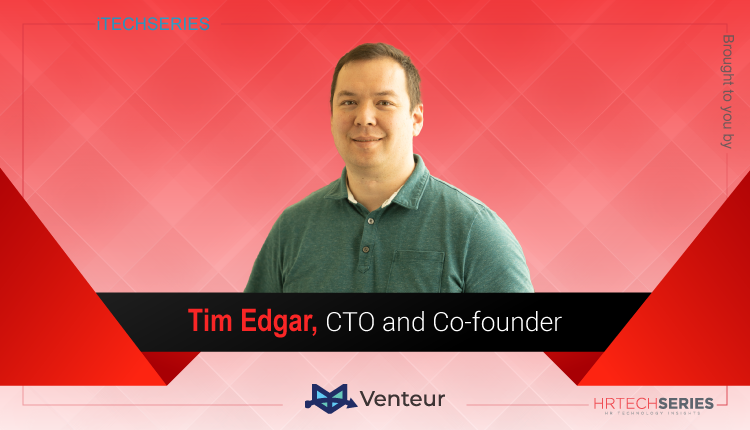
The burden of medical debt or possible medical bankruptcy affects a large section of the global workforce. Tim Edgar, CTO and Co-founder of Venteur highlights the importance of having better alignment between employers and employees to ensure the best suited health plans and benefits are put in place to circumvent this growing problem:
________________
Hi Tim, tell us about Venteur and what inspired the platform?
Our core premise is that people deserve control over their healthcare. While we may have agency in the doctor’s office, employers determine the one-size-fits-no-one insurance that shapes our access and cost of care.
That’s why we built Venteur. We work with employers to help them provide tax-free money that employees can use to choose and own their own insurance coverage. Instead of being locked into a single group plan, individuals get real control over both access (networks) and affordability (coverage). This model, called an Individual Coverage Health Reimbursement Arrangement (ICHRA), shifts the power back to employees.
My passion for this work comes from a personal place. I grew up on an individual/family health insurance plan because my parents were small business owners. In the first year of their business, my dad became seriously ill and wasn’t expected to live past 40. Thanks to the continuity of coverage afforded by a 35-year relationship with Blue Shield of California and the doctors and nurses at Scripps in San Diego, he’s now in his 70s. I believe that stability has saved his life. And because my parents owned their plan, they avoided medical bankruptcy even as premiums became our biggest expense.
That experience showed me the value of choice and ownership. It’s why Venteur exists: to help employers empower employees with the same agency my family relied on.
Catch more HRTech Insights: HRTech Interview with Allyson Skene, Vice President, Global Product Vision and Experience at Workday
From a global perspective, what are some of the factors that are negatively impacting the way employers offer health benefits to their workforce?
Well first, our healthcare system in America is quite unique in the world tying healthcare to employment. The roots go back to WWII wage freezes, when benefits became a hiring differentiator, and earlier, when railroads offered coverage for workplace injuries. Over time, tax breaks and mandates reinforced employers’ role as the buyer of healthcare.
When employers are the customer, not individuals, it distorts incentives and slows innovation. Employers often default to one-/few-size-fits-none group plans, administratively easier but leaving many employees underserved.
Key pressures today include:
Network complexity: Healthcare is inherently local, but national employers try to offer broad coverage. PPOs solve access but raise costs. Coverage may be affordable at headquarters but unaffordable elsewhere.
Increased chronic illness: Roughly 80% of our healthcare spend goes to chronic illness. Insurance is designed for the unpredictable, yet we treat these routine treatments as if it were a sudden accident. This reactive approach continues to drive costs higher.
Limited attention for point solutions: Many employers bring in point solutions to influence the cost curve of healthcare. While you may impact the majority, the minority likely is underserved. For example, a therapy app for carpal tunnel can be life-changing for an individual, but rarely makes an employer’s priority list.
Job Hopping: Companies may not see a return of investment on preventative strategies, such as GLP-1s that likely pay off in 5-10 years, given the decline in employee tenure to a current average of around 3 years. For individuals looking across their lifespan, the return on investment can be easily justified.
Pricing Dynamics: Consolidation of health systems and PBMs strengthen provider leverage. Hospitals often charge commercial plans at significantly higher rates to offset the cost of the uninsured.
How is Venteur enabling a positive change there?
Structural change makes it possible to do things differently. Individual plans are underwritten at the state level with risk adjustments, meaning they pool risk across far larger populations than any employer. Few employers have the buying power of an entire state.
This allows employers to support employees with local, community-optimized plans, without having to negotiate national networks themselves. Individuals get coverage tailored to their needs, while leveraging community buying power.
But choice alone isn’t enough. Too much choice can overwhelm or mislead. That’s where technology matters. Venteur provides decision support tools, powered by machine learning, to translate complexity into clarity. By analyzing medical expenditure data, we highlight the true value of coverage options so individuals can make confident, informed decisions.
This has always been my personal passion: building technology that empowers people with the collective wisdom that elevates the way we live. And with today’s advances in AI, we can personalize at scale, expand access to expertise, and give people tools to maximize both health and financial outcomes. When choice is paired with intelligence, it’s not just freedom, it’s empowerment.
Take us through the various ways in which AI is enabling better healthcare and health benefits for employees?
AI is making it possible to democratize expertise at scale.
Decision support: Our models can predict likely medical events over a 5-year horizon and evaluate which coverage provides the best financial outcome based on personal risk tolerance.
Generative AI for education: Complex benefits can be explained with infinite patience. Employees can ask questions, explore tradeoffs, and get consistent, trustworthy answers.
Best-practice reinforcement: Models can be fine-tuned with the expertise of seasoned brokers, navigators, and facilitators, effectively giving each employee a panel of expert advisors.
Adaptive personalization: As employees interact and build a data trail, AI can refine guidance and recommendations uniquely to them.
Employees shouldn’t feel alone in navigating benefits. HR teams can’t reasonably tailor guidance to every unique circumstance. AI makes this possible — and necessary — in shifting to employee-centered healthcare.
What should organizations do to improve how benefits are offered to their employees?
The biggest shift is moving from paternalism to empowerment. Instead of dictating one plan, give employees real choice with the right guardrails.
Most employees don’t realize how much employers spend on insurance, or whether those dollars create real value. When employees can direct that spend, they often say it feels like getting a raise — because they’re finally empowered to use it for what matters most to them.
With choice comes the responsibility to invest in education and technology. And technology must be more than generic advice. When employees feel heard, trust builds. Over multiple enrollment cycles, we see employees becoming more sophisticated buyers, often starting with something familiar, then customizing over time. Believe in their ability to learn and equip them with the right support.
Five takeaways and thoughts you’d leave HR and business teams who control how benefits are administered across their workforce before we wrap up.
- Align structure with incentive. Benefits designs should match the reality that healthcare works best when people, not employers, are the true customers. Models like ICHRA shift incentives towards individual choice and community scale risk pooling, which better serves both employees and employers long term.
- Choice must be paired with clarity. Offering options without guidance can overwhelm people. Technology should simplify complexity, highlight real tradeoffs, and help employees make confident decisions.
- Transparency builds trust. Few employees know the full value of what their employer contributes. Making costs and options clear turns benefits into something employees actually understand and appreciate.
- Personalization unlocks value. No two employees have the same needs. When tools and education meet people where they are, whether that’s explaining basics or optimizing for unique risks, employees become more sophisticated buyers over time.
- Empowerment is retention. When employees feel genuine control and confidence over their benefits, it signals trust and respect. That sense of empowerment drives loyalty in ways that salary alone can’t.
Read More on Hrtech : Invisible Gaps in Employee Experience: What your HR Tech Metrics aren’t Capturing
[To share your insights with us, please write to psen@itechseries.com ]
Tim Edgar is an engineer, entrepreneur, and currently CTO of Venteur, a startup reimagining healthcare by shifting the $1.6T spent on employer-sponsored health insurance into the hands of individuals. Tim has co-founded three startups, each grounded in the belief that data and technology can democratize expertise and empower people to make better decisions, from energy efficiency (Leafully) to financial forecasting (Optrilo) to personalized health coverage (Venteur). In addition, Tim spent over a decade at Microsoft building enterprise-grade systems at scale, with work spanning Bing, Azure, and Microsoft 365. He holds degrees in Mechanical Engineering and Electrical Engineering & Computer Science from UC Berkeley.

Venteur helps companies offer their employees a selection of personalized, high-quality health benefits that work best for them. Since launching in 2021, Venteur has offered ICHRA solutions that give employees more say in their own health care options and give employers predictability in their benefits budget and control over costs. Venteur is building a better benefits system that provides the coverage employees want at a price point small businesses can afford.