

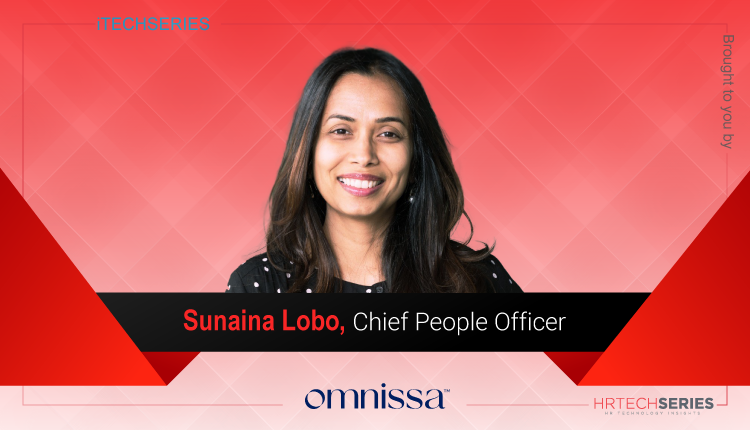
Sunaina Lobo, Chief People Officer at Omnissa talks about the changing scope of HR teams and impact of HRtech in this Q&A:
____________
Hi Sunaina, take us through the highlights of your journey in the HR realm so far?
I’ve been fortunate to live and work in eight different countries, which has given me a true global perspective that has shaped everything about how I lead today. When you begin working somewhere new, where you don’t know anyone, or cannot even speak the language, you quickly learn to be resilient and resourceful.
One of my favorite memories is moving to China early in my career. This was before iPhones, and I remember walking out of my hotel thinking, “Where do I go”? I couldn’t read the map, everything was in Chinese, and I didn’t know a single person. Those are the moments that really shape you. They teach you how to build relationships from the ground up and how to establish your own personal brand in an entirely new environment.
Another defining element of my journey has been having the right mentors, or what I like to call “sponsors”. These are people who believed in me, advocated for me, and opened doors I didn’t even know existed. Every new challenge, from founding my own business to leading global people teams, was possible because someone took a bet on me. Those opportunities fundamentally shaped my career.
But the most gratifying part of my career is watching talent I’ve worked with go on to lead in their own journeys. Over the years, I’ve had the privilege of seeing people I have mentored and coached, become CHROs, CMOs, and CEOs. Watching others flourish in their own careers, across industries and geographies is what makes this work so meaningful to me.
What do you think today’s SaaS Chief People Officers should be focused on?
Development: From a Chief People Officer perspective, our role over the next three to five years is to partner with our executive teams to create safe spaces to learn, experiment, and build new skills. Development doesn’t happen on the side or in a vacuum. Development happens while you’re doing the work.
That means hiring people who are curious, resilient, and eager to learn, and then building organizational structures that support learning and growth in real time.
Human-centric: At the same time, I believe we need to put the “H” back into HR. At its core, our function is about people, purpose, and potential, in addition to outcomes and productivity metrics. When people feel safe, engaged, and able to bring their whole selves to work, high performance naturally follows.
Alignment: Finally, cross-functional collaboration matters more than ever. We must work alongside product, IT, and strategy teams to ensure our people practices evolve alongside technology, not behind it.
Catch more HRTech Insights: HRTech Interview with Stan Suchkov, CEO and Co-founder of AI-native corporate learning platform, Evolve
Can you take us through some of the HRTech you’ve often relied on over the years to drive impact?
I believe HR technology needs to become more predictive, intuitive, and forward-looking –– and that perspective comes from the tools I’ve used over the years in my career. Like many HR leaders, I’ve worked extensively with various HR platforms, which serve as the foundation for workforce management in many organizations today.
These systems play an essential role in managing core HR processes, but they are often designed primarily as systems of record. They tell us what has already happened (rear view focused), which is valuable, but they don’t always help leaders understand what to do next.
That’s where I see a significant opportunity for transformation. Leveraging AI to turn HR platforms into sources of insight. Imagine being able to prompt your HR system and ask meaningful questions about your workforce –– not just demographics, but what you should be planning for next. For example, if your workforce is aging, should you be thinking about elder care benefits? If your organization is shifting geographies, what does that mean for engagement, retention or development?
The breakthrough will come when HR technology delivers a truly holistic, data‑driven view of the employee journey from hire to retire and actively guides innovation and decision-making along the way.
What can Chief People Officers do better to build innovative cultures that meet both business and employee needs seamlessly?
Innovation isn’t about free lunches or flashy perks. Those things may get attention, but they are not what creates an innovative culture.
What drives innovation is purpose at work. I know “purpose” can sound cliche, but research shows it’s one of the strongest predictors of long-term performance. When people feel heard, supported, and able to grow, they engage more deeply and produce better outcomes.
As people leaders, our role is to help employees find meaning in what they do, whether that’ through learning new skills, working on meaningful projects, or contributing to something bigger than themselves.
Peter Drucker famously said, “culture eats strategy for breakfast.” Today, I believe culture is strategy. When people feel they can be themselves, be able to do their best work, and grow without fear, innovation and productivity happen naturally. You don’t need gimmicks. People deliver exceptional outcomes because they want to, not because they have to.
We’d love a few thoughts on how you are seeing AI impact the entire HR scope of work today, in what ways do you feel AI will lead to a transformation in the role of a typical B2B HR executive?
AI is fundamentally changing the rhythm of how HR teams operate, but the real impact depends on how well organizations manage that change. Much of the operational and administrative work we focus on today can be streamlined, creating space for HR leaders to shift their energy toward strategy and the overall employee experience.
The biggest barrier to AI adoption in HR isn’t the technology itself — it’s managing the transition that comes with it. Many organizations hesitate not because the tools aren’t ready, but because teams are unsure how to adapt. When the change management challenge is effectively addressed, the return on investment can be significant.
As HR executives, our value proposition has evolved from operational execution to strategic enablement. We should be asking ourselves: How am I accelerating business growth through people? And how am I helping shape the future of my organization?
AI is also opening new opportunities in talent development by enabling more continuous, insight-driven conversations instead of rigid, form-based reviews. It moves development away from once-a-year checkboxes and toward ongoing, meaningful growth conversations.
Overall, HR is entering a period of real innovation. The opportunity now is to connect advancements across recruitment, development, and workforce insights into a cohesive, end-to-end experience that supports both people and business outcomes.
Five top workplace trends that will define the SaaS market in 2026 from your point of view?
- AI-driven hyper-personalization: Employees will expect experiences tailored to their goals, skills, and context.
- A reshaped global talent landscape: Distributed work, new economies, and cross-border collaboration will redefine team structures.
- A new era of insights-driven HR: Technology will evolve from recordkeeping to predictive guidance and decision support.
- Purpose-led culture building: Organizations will focus less on flashy perks and more on creating environments rooted in inspiration, innovation and growth
- Skill intelligence as a competitive advantage: Understanding workforce capabilities and future skill gaps will become critical to growth.
Read More on Hrtech : Digital twins for talent: The future of workforce modeling in HRTech
[To share your insights with us, please write to psen@itechseries.com ]

Omnissa, is a leading digital work platform company.
Sunaina is Omnissa’s Chief People Officer.