
HRTech Interview With Hari Kolam, CEO and Co-founder of Findem: Featuring Findem’s GliderAI

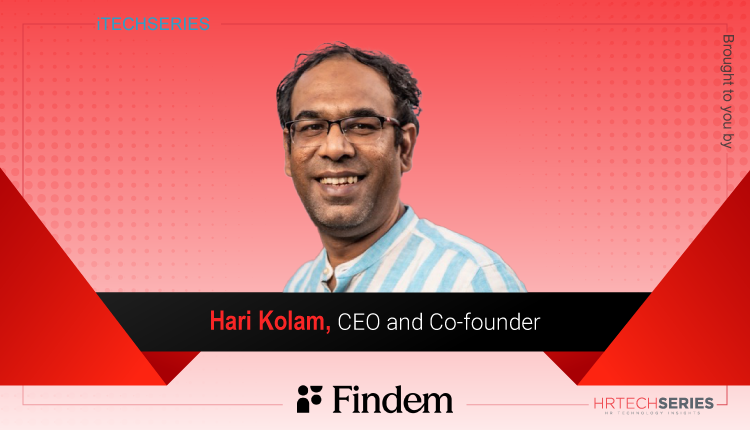
Hari Kolam, CEO and co-founder of Findem joins us in this HRTech chat to discuss the core benefits of their latest GliderAI enhancement:
_____________
Hi Hari, we’d love to hear about some of Findem’s latest innovations?
As CEO of Findem, my role is focused on three things – setting a clear vision for how AI can improve talent outcomes, making sure our platform delivers on that vision and driving the company’s growth.
It’s been a big year for us on the innovation front, with a strong focus on expanding what our platform can do. That’s included acquiring Getro and launching the Intelligent Job Post and, just recently, bringing Glider AI into the fold. Together, these advances allow us to deliver an AI-powered hiring solution that surfaces candidates who are discovered, assessed and verified before they ever reach a hiring manager.
We’ve also continued to deepen automation across the recruiting lifecycle to make the process more seamless and efficient. Across all of this work, the goal is to help organizations move beyond fragmented tools so recruiters aren’t bouncing between a dozen systems just to get their jobs done, and to create a more connected, outcome-focused approach to hiring.
Catch more HRTech Insights: HRTech Interview with Bernard Barbour, Chief Technology and Product Officer at Skillsoft
How does your acquisition of GliderAI impact how your platform’s features will be built out in future?
The acquisition of Glider AI is a major step forward in building a truly end-to-end hiring platform grounded in trusted data. Glider brings best-in-class assessment, screening and interview intelligence capabilities, which are critical to validating talent, not just finding it.
As we integrate Glider into the Findem platform, you’ll see a much tighter connection between discovery and verification, allowing hiring teams to move seamlessly from identifying the right candidates to confidently assessing their skills and fit within a single system.
From a product standpoint, this is shaping how we build going forward. We’re focused on connecting each stage of the hiring process rather than treating them as handoffs, with deeper integration between discovery, evaluation and decision-making and more automation and intelligence built into every step. Over time, this also enables more predictive workflows, where AI doesn’t just surface talent but helps determine who is most likely to succeed in a given role.
The goal is to move toward a model where candidates are not just identified, but meaningfully qualified before they reach hiring managers, leading to better outcomes for both companies and candidates.
What’s a few top of mind thoughts and best practices modern hiring teams need to keep in mind to prep for an AI powered influenced hiring future?
First, shift your mindset from tools to systems. AI is most powerful when it connects workflows end to end, not when it’s layered onto fragmented processes.
Second, prioritize data quality and trust. AI is only as good as the data behind it, so having structured, validated talent data is foundational.
Third, focus on outcomes over activity. The goal isn’t more candidates or faster processes — it’s better hires, stronger retention and more equitable decisions.
And finally, embrace how AI is reshaping the role of HR and talent teams. It’s not about replacing people, but about changing where they spend their time. As AI takes on more of the repetitive, process-driven work, it creates space for what humans do best — building relationships, nurturing candidates, strengthening employer brand and making more high-impact decisions.
From the job applicants’ perspective, what would you share for them to be able to learn how to build applications for an AI powered hiring future?
Candidates should think beyond the resume as a static document and focus on clearly demonstrating skills, impact and trajectory. AI systems are increasingly designed to understand context — not just keywords — so specificity matters. For example, instead of saying “led marketing campaigns,” it’s much more effective to say “led three cross-channel campaigns that increased pipeline by 25%,” which gives both AI systems and hiring teams a clearer sense of what you’ve actually done.
It’s also important to ensure your digital footprint is consistent and reflective of your experience, as many platforms draw from multiple data sources. And while AI is being used on the employer side, authenticity still wins. Candidates who can clearly articulate what they’ve done and how they’ve created impact will stand out, regardless of the technology being used.
As AI becomes more mainstream to hiring teams, what human side skills should those in human resources focus on making stronger to thrive in an AI first environment?
As AI becomes more embedded in hiring, the role of HR isn’t going away, it’s evolving. Judgment and critical thinking become even more important. AI can surface insights and narrow the field, but humans still need to interpret those signals, apply context and make the final call, especially when it comes to culture fit and long-term potential. At the same time, this shift allows talent teams to spend more time engaging directly with candidates and employees, building trust, strengthening relationships and delivering a more thoughtful, human experience.
There’s also a growing need for data literacy. You don’t need to be a data scientist, but you do need to understand how to read and challenge what the system is telling you and know when something doesn’t add up.
Communication and storytelling are becoming more critical as well, whether it’s explaining decisions, aligning stakeholders or creating transparency with candidates throughout the process. And alongside all of that, adaptability is key. The pace of change is only accelerating, and the HR professionals who will thrive are the ones who continuously evolve how they work alongside technology.
At the end of the day, AI can handle a lot of the heavy lifting, but the human side of hiring, judgment, relationships and trust, is what ultimately drives better hiring decisions.
Five thoughts on the future of AI and HRTech before we wrap up?
- Domain-specific AI will outperform general-purpose tools in hiring
Most AI today is broad, but talent decisions are highly contextual. The next wave will be domain-specific AI trained on expert-labeled data, hiring patterns and role requirements. These systems will understand nuance like what “great” looks like for a sales leader versus a machine learning engineer, and make far more relevant recommendations as a result. - The definition of a “qualified candidate” will shift upstream
Today, qualification largely happens after a candidate enters the funnel. In the future, AI will push that earlier, so candidates are increasingly discovered, assessed and even partially verified before a recruiter engages. The hiring process will start with a smaller, higher-confidence pool rather than a wide top of funnel. - Hiring will become more predictive
AI will increasingly help organizations understand not just who can do the job, but who is most likely to succeed, by factoring in patterns from past hires, skills, trajectory and context, not just resumes. - AI will meet talent teams where they already work
Rather than forcing users into new systems, AI will increasingly be accessed through interfaces talent teams already use, including LLMs and everyday productivity tools. The platforms that win will be the ones that have the capability to fit naturally into how recruiters already operate.
Internal and external talent will be managed as one ecosystem
Companies will stop treating hiring and internal mobility as separate functions. AI will make it easier to understand all available talent, inside and outside the organization, in a single view. That will fundamentally change how roles are filled, with “buy, build or borrow” decisions becoming more dynamic and data-driven.
Read More on Hrtech : AI-Native HRTech: Embedding Intelligence At The Core Of Workforce Strategy
[To share your insights with us, please write to psen@itechseries.com ]

Findem is the AI platform for talent decisions. Built to find what builds people.
Hari Kolam is the CEO and co-founder of Findem, the AI platform redefining how organizations understand and achieve talent outcomes. As CEO, he leads the company’s vision, strategy and execution, helping enterprises move beyond traditional recruiting toward a more data-driven, predictive approach to workforce planning and hiring.