
HRTech Interview with Bernard Barbour, Chief Technology and Product Officer at Skillsoft

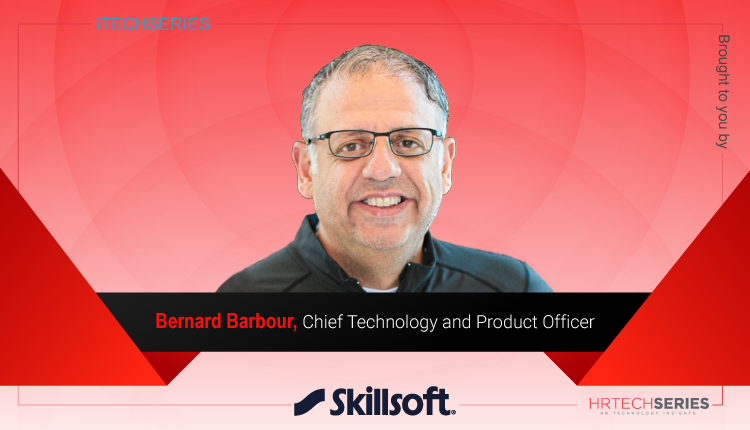
Bernard Barbour, Chief Technology and Product Officer at Skillsoft chats about the evolving HRtech landscape in this interview:
__________
What’s the one thing you are most looking forward to in your new role at Skillsoft?
What I’m most looking forward to is the opportunity to make a meaningful impact at true workforce scale. Skillsoft has an incredible history and deep market penetration, which gives us the ability to reach millions of learners and influence careers in ways that genuinely matter. That kind of reach is rare—and it’s deeply motivating.
I’m also inspired by the chance to leverage technology to solve real, practical workforce challenges. Many organizations struggle to clearly understand their skills landscape and how their workforce capabilities align with their business needs. Being able to help organizations map skills, understand maturity, and take informed action—while also supporting individual career growth—is where I see Skillsoft making a lasting difference.
What are the five best practices or tips you’d share with product leaders in the HR tech space?
I spend a lot of time talking about value creation, because while it’s easy to discuss, it’s much harder to execute well, particularly in the HR space, where impact doesn’t always show up as a straight line to the P&L. One of the most important disciplines is being clear on what problem you’re solving or what opportunity you’re creating for the customer. Without that clarity, even well‑intentioned solutions can miss the mark.
Equally important is having a deep understanding of who the product is being built for. Too often, systems are designed by experts for experts and then handed to users who don’t operate at that same level of technical depth. That disconnect can quickly undermine adoption and impact.
People are often the largest line item on a P&L, yet it can be difficult to connect skills, learning, and workforce investments directly to financial outcomes. Measuring skills maturity and aligning skills supply to execution helps make that value far more tangible.
This outcomes‑focused mindset applies well beyond product development, and is what ultimately makes value creation more achievable.
Catch more HRTech Insights: HRTech Interview with Sandra Moran, Chief Marketing Officer of Schoox
Can you briefly talk about some near‑term plans for Skillsoft Percipio?
When I think about the Skillsoft Percipio Platform, what stands out is that it represents a real application of AI in the workplace that’s focused on delivering tangible value, not just experimentation.
A key priority is turning skills measurement into meaningful action. Many organizations have data, models, or frameworks, but struggle to translate that information into decisions that actually drive business outcomes. We’re focused on helping bridge that gap. Another important area is the continued move from role‑based models to skills‑based approaches. How people learn—and how work gets done—has fundamentally changed, and platforms need to reflect that reality.
The Skillsoft Platform is evolving alongside those shifts, supporting more dynamic, personalized learning and skills development. What’s been announced so far represents early progress, and there’s significant opportunity ahead to continue advancing the platform in ways that benefit both learners and organizations.
What’s driving demand for unified skills management systems today?
The demand is being driven by a convergence of forces—most notably the shift in learning and how workforces are managed, both of which are being accelerated by AI. We’ve seen similar patterns in past technology waves. The early internet era, for example, came with massive expectations, a bubble that eventually burst, and then long‑term value creation as organizations adapted. AI is on a similar path, but adoption is happening much faster.
Today’s workforce needs to be far more adaptable. Employees increasingly need to be AI‑native, think more like architects, and continuously evolve their skills—often much earlier in their careers. That puts pressure on organizations to better understand skills supply and demand. Unified platforms are critical here because they connect the learner and the organization. It’s not just about managing systems—it’s about enabling both sides to grow and respond to change in a coordinated way.
What do you see as the top HR tech trends driving impact today?
Skills management and skills visibility continue to be the most impactful trends in HR technology today. Organizations still need to answer fundamental questions about whether they have the right skills in the right roles at the right time—and that challenge hasn’t gone away. What has changed is how people consume information and learning experiences. Expectations around personalization, relevance, and usability are much higher, and HR technology must meet those expectations to remain effective. While the core problems are familiar, the way organizations address them—and the platforms they rely on—are evolving rapidly to keep pace with changing workforce needs.
What impact is AI‑powered HR technology having across global HR teams?
AI has the potential to create real efficiency and insight, but it also introduces risk if it’s applied without enough care or context. In areas like candidate evaluation and talent management, organizations can unintentionally overlook high‑value individuals if AI is used too narrowly. For example, relying too heavily on automated screening or performance signals can miss important nuance—such as growth potential, adaptability, or contextual factors that don’t show up cleanly in data.
AI should enhance decision‑making, not replace human judgment. Conversations between leaders and employees, context‑driven evaluations, and critical thinking remain essential—no matter how advanced the technology becomes.
What are five takeaways you’d leave HR tech leaders with?
Technology will continue to create efficiency, but its real value comes from how well it helps organizations connect skills to the problems they’re trying to solve.
Skills on their own don’t drive impact—impact happens when skills are clearly linked to business needs and real workforce decisions. As work continues to shift, organizations need to move beyond static role definitions and think more deliberately about how skills enable people to do higher‑value, more strategic work. HR tech leaders already recognize that roles will change, but it’s important to reinforce that the need for people isn’t declining but continuing to grow (and in many cases accelerating.) That transition doesn’t happen automatically but requires organizations to turn measurement into action.
It’s also important to remember that AI and technology should support better decisions, not replace human judgment. Context, conversations between leaders and employees, and an understanding of individual growth and potential remain essential, especially when managing skills and talent at scale.
This is an exciting moment because skills‑based approaches give organizations a way to elevate people, not sideline them. When skills are aligned to real work and real outcomes, technology becomes a bridge—from manual effort to strategic impact—and that’s where the greatest opportunity lies.
Read More on Hrtech : Return-to-Office ROI: How HR Tech Is Measuring Productivity and Employee Well-Being
[To share your insights with us, please write to psen@itechseries.com ]

Skillsoft is a global leader in AI-native skills management for the human + AI era. By unifying learning, real-time skills intelligence, and workforce insights, Skillsoft helps enterprises build their Skillforce™ — humans and AI working together to drive measurable business outcomes
Bernard Barbour, is Chief Technology and Product Officer at Skillsoft