
U.S. and UK Businesses Call for Improvement as Employee Education Singled Out as the Biggest Weakness During Lockdown


Apricorn, the leading manufacturer of software-free, 256-bit AES XTS hardware-encrypted USB drives, announced new findings from a Twitter poll exploring the data security and business preparedness for remote working during the pandemic. More than 30 percent of respondents singled out employee education as being the biggest area where companies needed to make changes to improve cybersecurity.
HR Technology News: Cornerstone And ServiceNow Integrate To Promote Continuous Workplace Learning
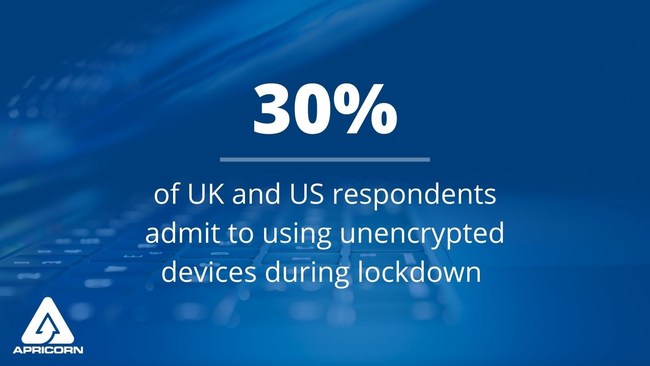
The poll was issued over six days and targeted employees in both the U.S. and UK. In addition to concerns about employee education, respondents also flagged updates to hardware (29%), endpoint control (21%) and enforcing encryption (19%) as areas of weakness, where organizations need to make changes to improve cybersecurity. Given that almost 30 percent of respondents admitted to using unencrypted devices during the pandemic, this raises many concerns particularly at a time when we are seeing a dramatic increase in the volume of data being downloaded, and a potential for more data on the move.
HR Technology News: IBM Study: COVID-19 Is Accelerating The Skills Gap And Raising Employee Expectations Of Their…
“Employees have a critical role to play in their organization’s cyber security processes, from recognizing the tools required, through to the policies in place to protect sensitive data. Whether it be through the delivery of awareness programs or ongoing training, establishing a culture of security within the workforce is essential,” said Kurt Markley, Director of Sales at Apricorn. “Endpoint security is critical, and deploying removable storage devices with built-in hardware encryption, for example, will ensure all data can be stored or moved around safely offline. Even if the device is lost or stolen, the information will be unintelligible to anyone not authorized to access it.”
In addition, more than 40 percent of respondents admitted that, as an individual, they were not fully prepared to work at home securely and productively. Almost a fifth (18 percent) said they lacked the right technology to do so, 16 percent were not sure how to, and just over 20 percent said they were still not able to work remotely.